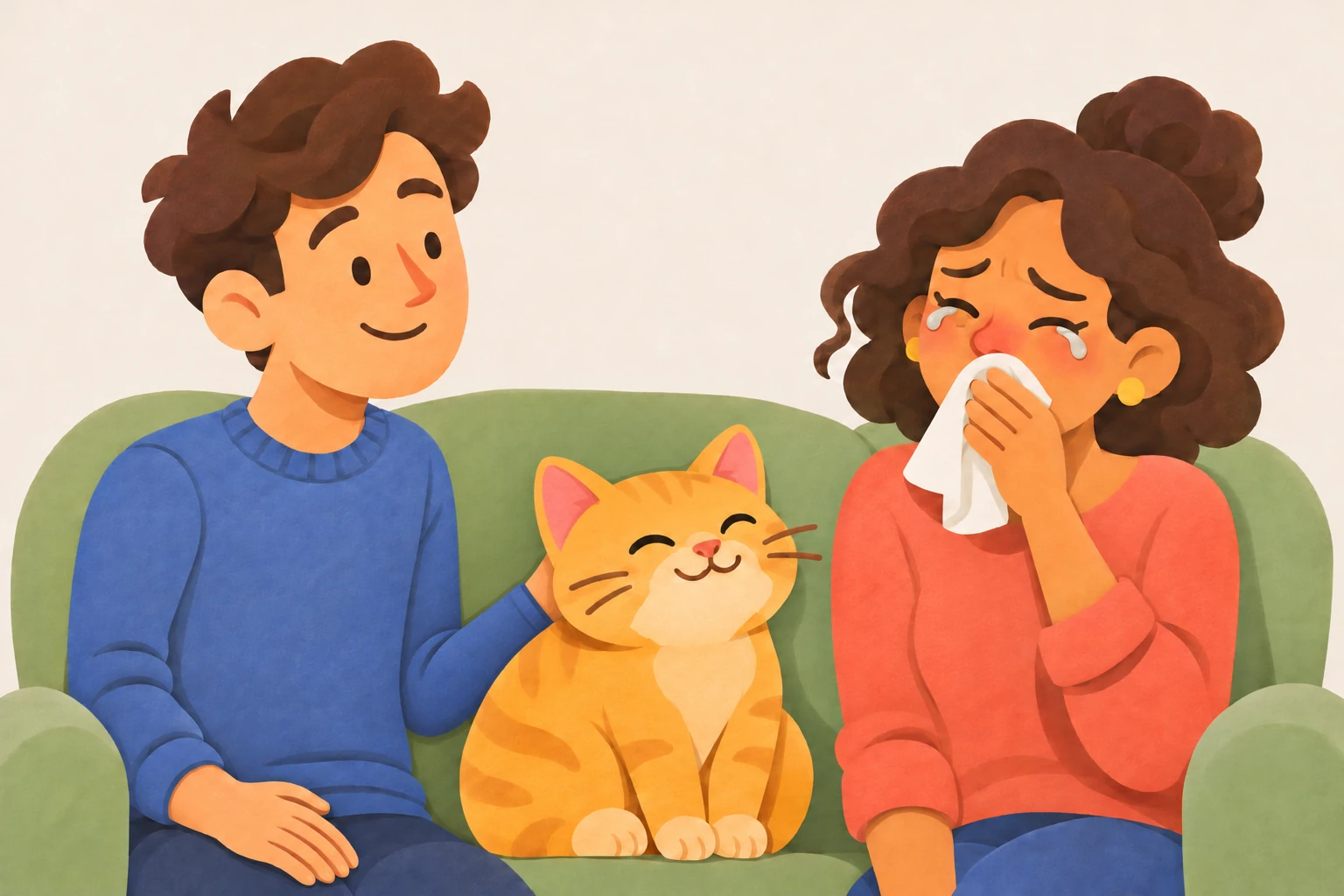
Nearly four in ten American households share their home with a cat. Not everyone’s immune system is thrilled.
For most of us, cats are cute, (mostly) benevolent creatures that live for treats. But for some people, a few minutes around one means itchy eyes, sneezing, or even hives. Why the difference?
The fur is carrying the culprit
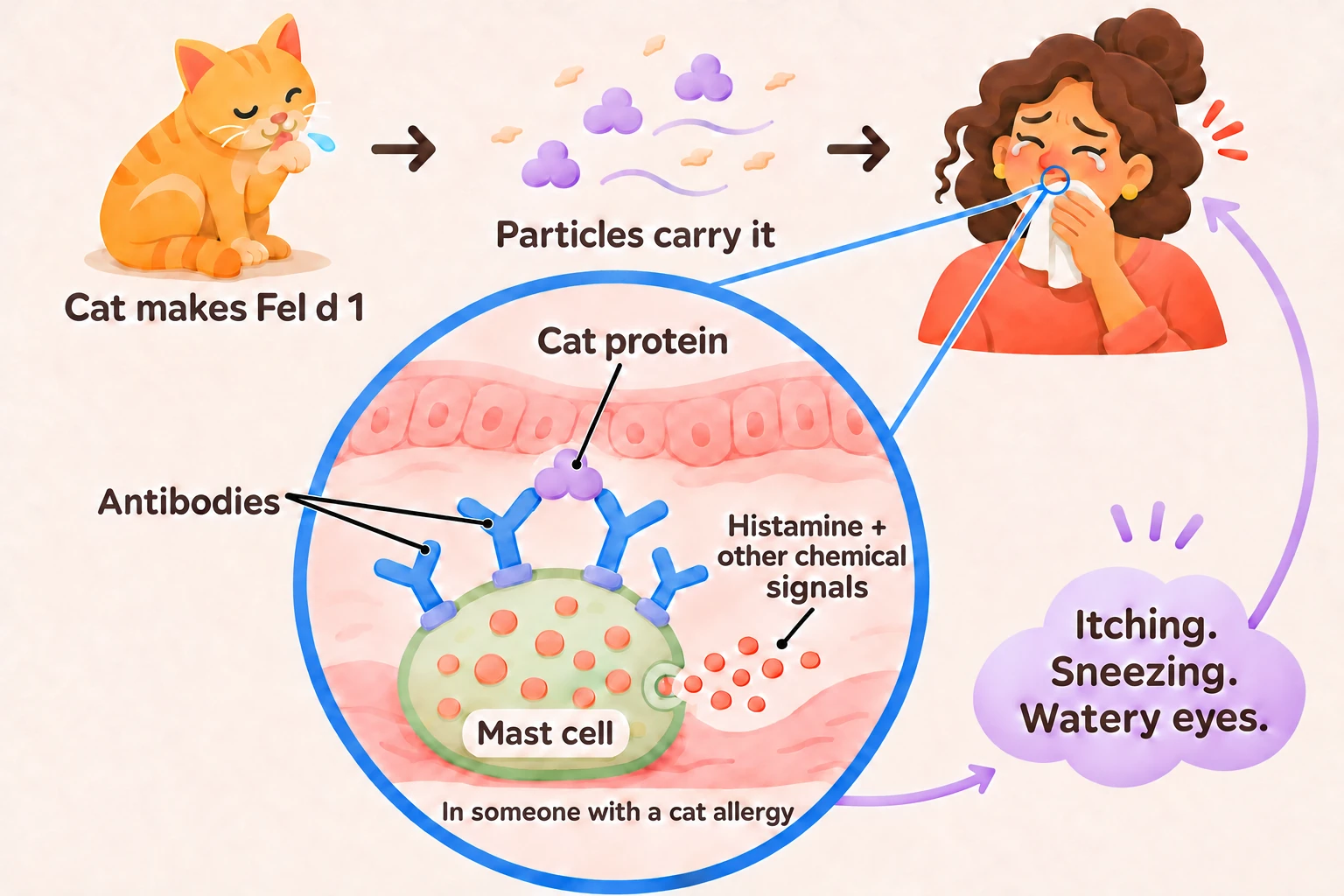
The trouble starts when your immune system treats the cat’s genetics as a threat. The proteins in a cat’s urine, saliva, and skin glands can cause or aggravate irritation in some people. One such culprit is Fel d 1, a protein produced in salivary and skin glands. When you pet a cat, those proteins can find their way onto your skin, clothes, and into the air.
Here’s how it works: An allergic response develops after the exposure, where the cat proteins bind to certain of your antibodies, triggering the release of histamine and other chemicals that bring on itching, sneezing, and watery eyes.
One DNA letter linked to cat allergies
But what determines whether your immune system will react to those proteins? HLA genes help shape which proteins trigger an immune response. The versions you inherit can influence how your immune system recognizes a cat protein and how it responds.
In a study of 53,862 people, researchers identified a DNA difference called rs17533090 near HLA-DQA1. At this position, DNA can carry a G or a T. The G version was associated with higher odds of reporting cat allergy.
Where Lifecode comes in
The HLA region is one part of a much bigger genetic picture. Published cat-allergy scores combine thousands of DNA differences to estimate a person’s tendency to develop a cat allergy.
For you, this means an estimate of inherited susceptibility to cat allergy. Interestingly, a cat’s coat can also contain other potential allergens—namely, pollen and mold spores. Our platform may help you figure out if you're allergic to cats, or if your feline friend instead happens to harbor other unwanted allergens on its coat. To find out what’s triggering symptoms now, an allergist can use your history and targeted allergy testing to distinguish reactions to cat proteins from reactions to pollen or other allergens.
Make cat time easier on you
Your bedroom. Keep the cat out of the room where you sleep. This reduces exposure during the many hours you spend there.
Your contact. Wash your hands after petting the cat and before touching your eyes.
Your symptoms. Note when symptoms appear and bring that history to an allergist, especially if symptoms recur or include wheezing.
The same reading, everywhere else
Cat and dog allergies can share inherited influences, even though the proteins that trigger them differ. That’s why genetics can connect two experiences that feel quite separate.
Lifecode’s approach to complex traits combines whole-genome sequencing with models such as AlphaGenome, which predict how DNA differences affect gene activity. Our proprietary scoring algorithms connect those predictions with traits measured in people to estimate inherited tendencies in skin, hair, fitness, and other health and wellness traits.
Lifecode reads all 3 billion letters of it once, then re-reads them as the science improves, so what your sequence says about this today is the least it will ever tell you. That is why we built Lifecode.
Read your own genome.
Order your genome